
Laser Welding Machines
Shop by Type:
Handheld→Portable setups for repair & fabrication
A laser welding machine—often called a laser welder—delivers high-precision metal joining with clean seams and minimal heat distortion. You can use laser beam welding to speed up production, reduce grinding and rework, and improve consistency on stainless steel, carbon steel, and many alloys. Browse laser welding machines for sale below, compare key specs, and request a fast quote if you need help matching power, application, and budget.
Showing the single result
-
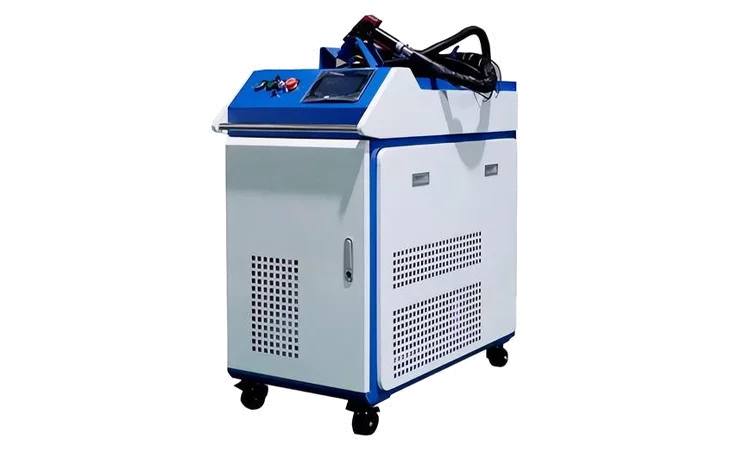
Handheld Laser Welder Machines
Price range: $ 6,800.00 through $ 8,850.00Select options This product has multiple variants. The options may be chosen on the product page

Showing the single result
Laser Welding Machine (Laser Welder) Selection for Real-World Metal Work
A laser welding machine gives you controlled heat input, tight seams, and repeatable results across common fabrication and repair tasks.
Many buyers use the term laser welder for the same equipment, while laser beam welding describes the welding process that the machine performs.
If you want faster cycle time, cleaner weld appearance, and less post-processing than traditional methods, you should start with your material, thickness range, and workflow.
Where laser welders fit best
- Automotive and repair: panel work, brackets, fixtures, and controlled heat on thin metal.
- General fabrication: consistent joints on stainless steel, carbon steel, and common metal assemblies.
- Small production runs: repeatable weld quality that reduces rework and finishing labor.
Key Benefits of Industrial Laser Welding Equipment
- Cleaner seams: you reduce spatter and cleanup compared with many conventional setups.
- Low distortion: you control heat-affected zones and protect part geometry.
- Higher throughput: you increase speed on repetitive weld paths and standard joints.
- Lower rework: you cut grinding time and improve first-pass yield.
How to Choose the Right Laser Welding System
You get the best outcome when you match the machine to your use case instead of chasing a single spec.
Use the checklist below before you buy a laser welder machine for sale.
- Material and thickness: define your primary metals and typical thickness range.
- Duty cycle and workload: estimate daily run time and peak demand.
- Weld quality target: decide whether you prioritize cosmetic seams, penetration, or both.
- Workspace and mobility: confirm whether you need a compact setup or a fixed station.
- Support and consumables: plan accessories, protective gear, and replacement parts.
Laser Welding Machine Price: What Drives Cost
When buyers search laser welding machine price, they usually compare more than the sticker number.
You should evaluate total ownership cost: productivity gains, consumables, and downtime risk.
These factors move laser welder cost the most:
- Power configuration: higher power generally supports thicker materials and faster travel speeds.
- Cooling and duty cycle: stable cooling supports long sessions and consistent output.
- Build quality and reliability: stronger components reduce maintenance and production interruptions.
- Included accessories: consumables, nozzles, safety gear, and add-ons affect your ready-to-work budget.
Need a Quote or Recommendation?
Tell us your material, thickness, and daily workload. We will recommend a laser welding machine that fits your target weld quality and budget, and we will quote quickly.
Action: Request a quote or contact our team before you purchase.
Laser Welding Machines for Sale: What to Compare on This Page
Use the product list above to compare practical specs, included components, and warranty/support terms.
If you already know what you need, you can buy a laser welder based on your power target and application.
If you still evaluate options, start with material type and weld appearance requirements.