
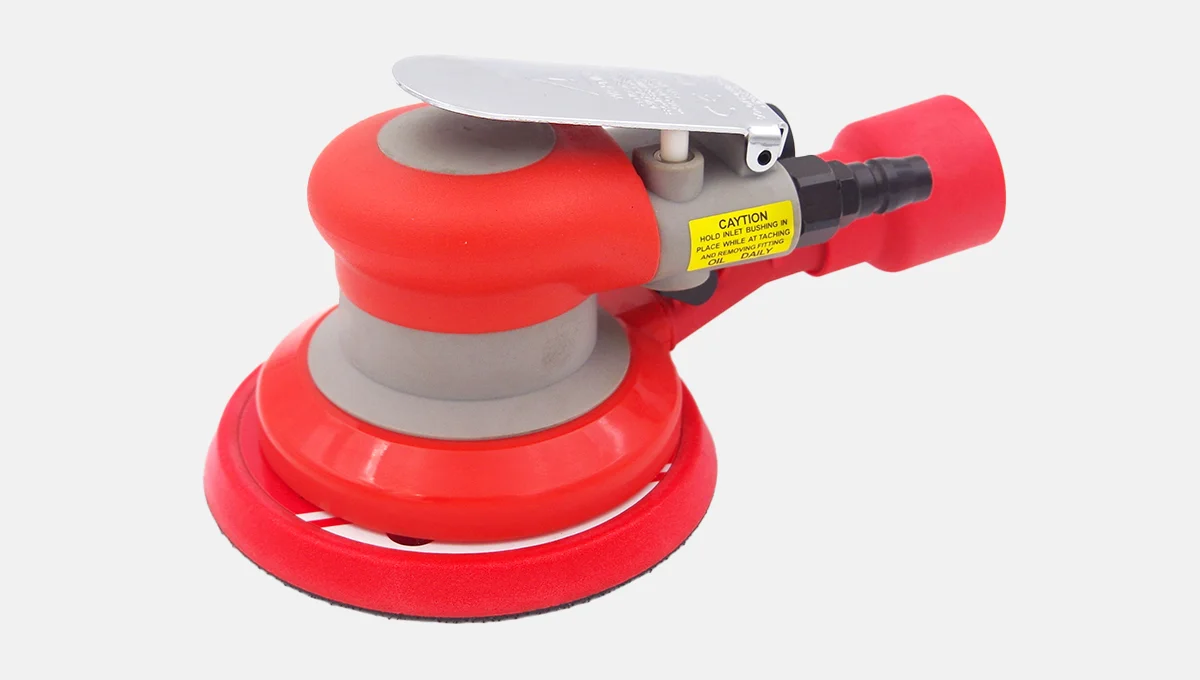
If you’ve ever tackled a woodworking project, refinished furniture, or worked on a car body, you know that sanding can be the most time-consuming and labor-intensive part of the job. Enter the pneumatic sander—a powerful tool that can dramatically speed up the process and deliver a superior finish. But what exactly is it, and how can it benefit you?
This comprehensive guide will break down everything you need to know about pneumatic sanders, helping you decide if this powerful tool deserves a spot in your workshop.
Understanding the Basics: It’s All About Air Power
A pneumatic sander is a sanding tool powered by compressed air. Unlike its electric counterparts, which have an internal motor, a pneumatic sander connects to an air compressor via a hose. The compressor generates the power, and the sander converts that air power into a rapid sanding motion.
Think of it this way: an electric sander is a self-contained unit, like a laptop. A pneumatic sander is more like a desktop computer—it needs an external power source (the compressor) to function, but it often delivers more power and longevity for heavy-duty tasks.
How Does a Pneumatic Sander Work?
The process is straightforward:
- An air compressor generates and stores compressed air.
- You connect the sander to the compressor using a pneumatic hose.
- When you press the trigger, compressed air flows into the sander.
- Inside the tool, the air drives a mechanism (like a piston or a small turbine) that creates the sanding motion—whether it’s orbital, dual-action, or linear.
- This motion is transferred to a sanding pad, where an attached piece of abrasive paper does the work on your surface.
Common Types of Pneumatic Sanders
Not all sanding jobs are the same, and neither are pneumatic sanders. Here are the most common types you’ll find:
- Pneumatic Dual-Action (DA) Sander / Random Orbital Sander: This is the most popular type for auto body work and fine woodworking. It simultaneously moves the sanding pad in two motions: a spinning rotation and a random orbit. This “random” pattern is crucial because it prevents visible swirl marks on the finish, making it ideal for final sanding before painting or staining.
- Pneumatic Orbital Sander: Often confused with a DA sander, a true orbital sander moves in a fixed circular pattern. It’s aggressive and can leave swirl marks, so it’s better suited for rapid material removal where the final finish isn’t critical, rather than for fine finish work.
- Pneumatic Belt Sander: These are the workhorses for heavy-duty stock removal. They use a continuous loop of sandpaper (a belt) that rotates at high speed. They are incredibly powerful and are used for leveling surfaces, like evening out a wooden floor or a large tabletop. They require careful handling to avoid gouging the material.
- Pneumatic Die Grinder with Sanding Attachment: While not a sander in the traditional sense, a die grinder is a versatile pneumatic tool that can be fitted with small sanding drums, discs, or pads. It’s perfect for detail work, reaching into tight corners, and light grinding.
Advantages of Using a Pneumatic Sander
Why choose an air-powered tool over a convenient electric one? The benefits are significant for the right user:
- Power-to-Weight Ratio: Pneumatic sanders are typically much lighter than electric sanders with comparable power. This reduces user fatigue, which is a major advantage during long sanding sessions.
- Consistent Power: They maintain a consistent speed under load and won’t bog down or overheat like an electric motor might. The power delivery is smooth and relentless.
- Durability and Longevity: With fewer internal electrical components, pneumatic sanders are simpler and often built to withstand harsh conditions (like an auto body shop). They are generally more durable and have a longer lifespan.
- Lower Maintenance: Maintaining a pneumatic sander usually just involves adding a few drops of air tool oil into the air inlet before use to keep the internal mechanism lubricated.
- Safety: Since there is no electric motor, there is no risk of electrical sparks. This makes them a safer option in environments where flammable fumes may be present.
Disadvantages to Consider
Of course, pneumatic tools aren’t for everyone. The main drawbacks are:
- The Need for an Air Compressor: This is the biggest hurdle. You cannot use a pneumatic sander without a capable air compressor and the necessary hose and fittings. This represents a significant additional cost and requires space in your garage.
- Limited Mobility: You are tethered to your compressor by the air hose, which limits your range of movement compared to a cordless electric sander.
- Moisture Issues: If your compressor isn’t equipped with a good moisture trap, water vapor from the compressed air can be blown onto your project, which can be a problem when prepping for paint.
- Noise: Both the sander and the compressor can be very loud, requiring hearing protection.
Who Should Use a Pneumatic Sander?
Pneumatic sanders are ideal for:
- Auto Body Professionals and Enthusiasts: The DA sander is an indispensable tool for sanding body filler and prepping car panels for paint.
- Serious Woodworkers: Those who spend hours sanding large projects like furniture, cabinets, or boats will appreciate the reduced weight and fatigue.
- Production Shops and Manufacturing: Their durability and consistent power make them perfect for high-volume environments.
They might be overkill for:
- The casual DIYer who only occasionally sands small projects.
- Anyone who doesn’t already own or have the budget for a quality air compressor.
Choosing the Right Air Compressor
If you decide to go pneumatic, your compressor is key. You need one that can deliver sufficient CFM (Cubic Feet per Minute) at the required PSI (Pounds per Square Inch). Check the sander’s specifications for its CFM requirement at a certain PSI (e.g., 90 PSI). Your compressor must meet or exceed this CFM rating to run the sander continuously without dropping pressure. A small “pancake” compressor is usually insufficient for a DA sander; you’ll likely need a larger garage-style compressor.
Conclusion
A pneumatic sander is a powerful, durable, and professional-grade tool that excels at reducing user fatigue and delivering a high-quality finish on large-scale projects. While the initial investment and requirement for an air compressor can be a barrier, the performance benefits are undeniable for serious woodworkers, auto body technicians, and dedicated DIYers.
For those already equipped with a capable air compressor, adding a pneumatic sander—especially a versatile Dual-Action model—is a logical and rewarding upgrade that will transform the most tedious part of your project into a faster, smoother, and more efficient process.
Ready to explore pneumatic sanders? Check out our detailed buyer’s guides and reviews to find the perfect model for your workshop.

